Patricia Walsh is an established public art consultant, writer, and artist with more than 25 years of experience in the public art field. She is the founder and principal of PAW Arts (PAW Arts, LLC), a specialized advisory firm through which she works with municipal governments, non-profits, urban planning organizations, and individual artists to design, implement, and maintain public art programs and policies. This week, we are pleased to share a guest column from her Substack, Public Art Curious, a publication designed to pull back the curtain on how monumental public art installations actually transition from concept to the built environment:
Government has been shaping the public art landscape in the United States for well over a century— with federal investment dating as far back as the mid-1800s. But what does that actually look like in practice? Government involvement in public art takes many forms: directly commissioning and purchasing works, funding artists and organizations through grants, incentivizing private developers to incorporate art into their projects, and managing donated artworks that enter the public realm. In each case, public agencies play a role not just as funders, but as stewards of a process — ensuring that art is responsive to the community and appropriate for its site.
This article looks at four common mechanisms governments use to bring public art into our shared spaces.
Perhaps the most straightforward way government engages with public art is by hiring an artist to create a work or by purchasing one directly. One of the most common funding mechanisms for this is a percent-for-art ordinance. In a 2017 survey I conducted of public art programs, about 66% of public entities with a public art program had a percent-for-art ordinance in place. This type of policy dedicates a percentage—typically 1–2%—of funds from a capital investment project, such as a library or fire station, to artwork for that site.
The City of Chicago through the Department of Cultural Affairs and Special Events operates a percent-for-art program which “assures that 1.33% of the construction budget for construction or major renovation of a City-owned or City-financed building or structure, or for certain outdoor improvements, is used to commission art at that building, structure or improvement.” This type of policy ensures that public art is integrated into communities when a city invests in local facilities or infrastructure — helping residents see their local history, culture, and values reflected in their everyday spaces.
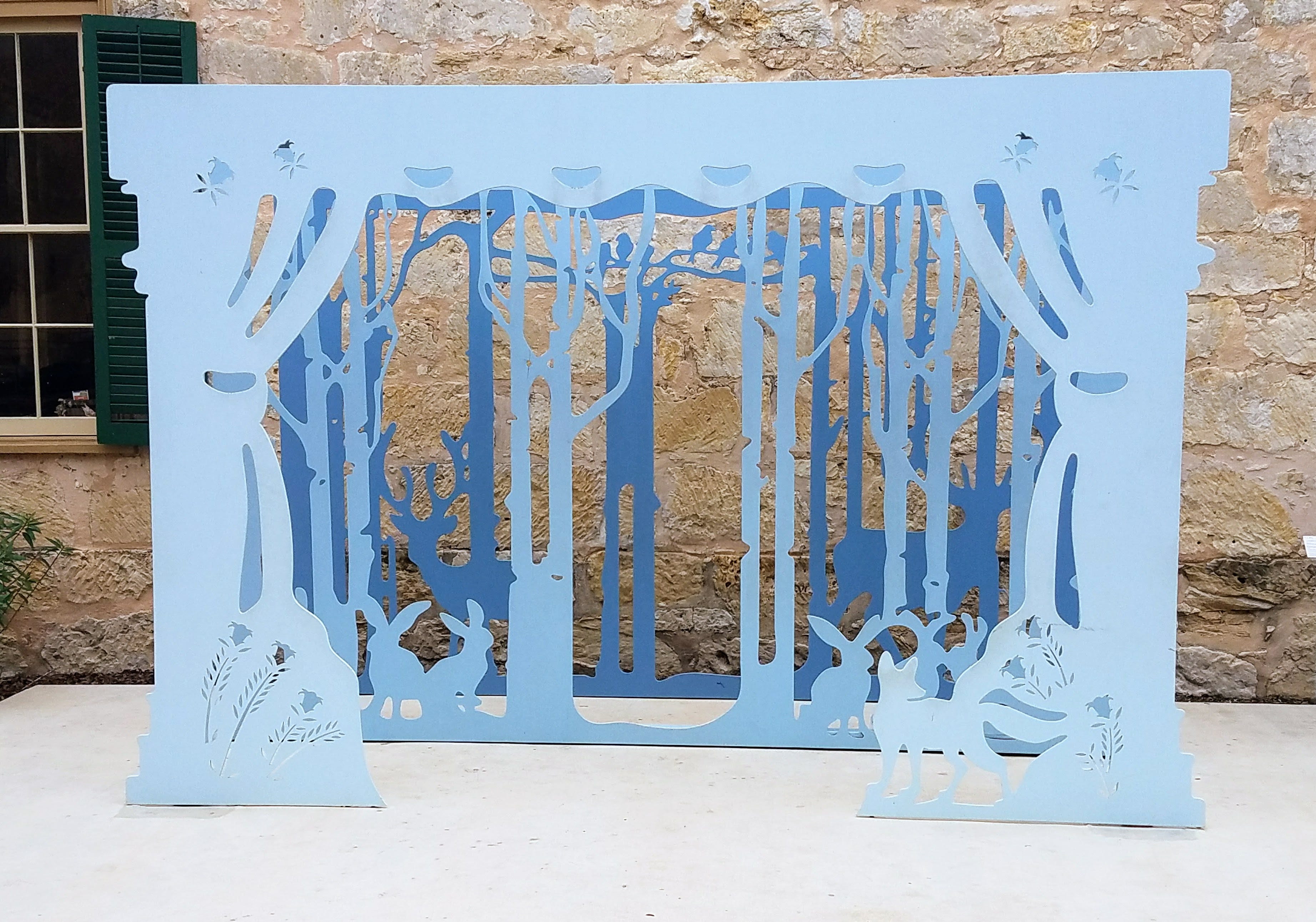
“Sideshow” by Jennifer Khoshbin located at Yanaguana Gardens at Hemisfair Park, San Antonio. Funded through city investment. Photo by author.
Another way government supports public art is through grant programs. These types of programs can provide local artists and community groups with the resources they need to bring artwork to life, covering everything from artist selection to fabrication and installation. Grant programs for public art allow for more direct artist- and community-led interventions that may fall outside the scope or capacity of a government entity. They can still result in public art that is representative of local people, history, and cultures — often in ways that government-led commissioning cannot.
One of the most widely known sources of public art funding is the National Endowment for the Arts, which currently supports public art projects through its Grants for Arts Projects program. An example at the local level is the City of Healdsburg, California Public Art Grant Program—Arts for All, which is designed to enrich the public environment through art installations and other cultural programming for artists within the city and the surrounding area.
Government also facilitates public art on private property. This can take the form of local government working with private entities to incorporate art as part of a land use development project. Here the government can implement a requirement similar to the percent-for-art model applied to government capital projects or encourage investment in public art as part of a community benefits agreement tied to a residential or commercial project. This type of support allows for private investment to further support access to public art for areas of the community that the local government may not have the focus or the funds to invest in.
An example of a program that encourages private developers to invest in public art as a community benefit is Public Art Program for Arlington County, VA. In this model, public art program staff can guide the process from understanding the developer’s goals through selecting an artist to design and implement the work. This policy has flexibility to allow for a unique artwork on the site of the development or to provide the funding into a Public Art Fund to be used in other ways by the County.
One of the least talked-about ways government facilitates public art is through the acceptance and management of donated artworks from private individuals or organizations. While this doesn’t happen as frequently as the other mechanisms, the process has become more sophisticated over time. Local governments increasingly want to ensure that donated works are the right fit for the community and are setting conditions around long-term stewardship—sometimes requiring that donated funds accompany the artwork to support its ongoing care.
Examples of this type of procedure include The New York City Department of Parks & Recreation and the City of Lancaster, Pennsylvania. Both policies outline specific ways to ensure that artworks that are being donated to the community are both a good fit and will be properly cared for in the long term. Donations of public art require this level of scrutiny as to not overburden the local government with artworks it cannot manage, but can also be a clear path for communities that are aiming to build up their public art collections but don’t have the full means to implement a public art project from scratch.
These four mechanisms—commissioning, grants, private development requirements, and donations—represent the core ways local, state, and federal governments actively shape the public art that surrounds us. Each approach reflects a different philosophy about who should pay for public art, who should initiate it, and how community input fits into the process. Understanding these structures is useful not just for arts administrators, but for artists, advocates, and community members who want to engage more meaningfully with how public art decisions get made.
Which of these mechanisms have you encountered in your community? How have you seen your local government engage with public art—and where do you think there’s room to do more?
Click here to read more of Patricia's work and become a subscriber!