Most nights, most people default to a screen. A phone in one hand, a show in the background, a room lit blue and alone. Moment Factory has spent twenty-five years designing an argument against that default, one so persuasive that institutions like the National Geographic Society, the Museum of Science in Boston, and Crystal Bridges Museum of American Art have all made the same bet: that immersive public experience can extend learning, deepen engagement, and give people a reason to gather in person.
Founded in Montreal in 2001, the studio has since built more than 600 projects worldwide. It's become one of the most influential names in immersive environments by combining video, sound, light, architecture, and interaction into experiences that feel less like content and more like shared ritual. Immersive technology is no longer a novelty add-on for these institutions. It is becoming a serious tool for education, placemaking, and public engagement, and Moment Factory's client list is a working map of that shift.
This September, that shift gets its own stage. Marie Belzil, Creative Director of Moment Factory, , closes CODAsummit in Santa Fe, a chance for the CODAworx community to hear directly from someone who has spent a decade answering this exact question: what happens when a cultural institution treats immersive media as mission, not marketing.
How Moment Factory is taking immersive experience beyond the gallery
On June 26, the National Geographic Society opened its new Museum of Exploration in Washington, D.C., the most significant campus expansion in the Society's history, and handed a meaningful piece of it to Moment Factory. The centerpiece, Wonders of Our World: Ocean, is a seventeen-minute nightly outdoor show that wraps the museum's courtyard in a 360-degree orchestration of projection, lighting, and spatialized sound, built from real footage shot by National Geographic Explorers. Geoverse, an interactive education hub, and a touring exhibition, Photo Ark: Animals of Earth, round out the commission. Emily Dunham, the Society's Chief Campus and Experiences Officer, credited the studio with finding new ways to carry the same wonder its field explorers encounter into a public, after-dark experience. That is the clearest sign of what's actually happening: a nonprofit research institution treating immersive technology as an extension of its actual mission, not a marketing layer on top of it.
This is not a first date. In 2021, Moment Factory built Arctic Adventure, a permanent exhibit at the Museum of Science in Boston, which led to a second permanent piece, Innovation: Earth. At Crystal Bridges Museum of American Art, the studio produced North Forest Lights, an outdoor digital art exhibit, turning the museum's grounds into their own destination after the galleries' closing time.
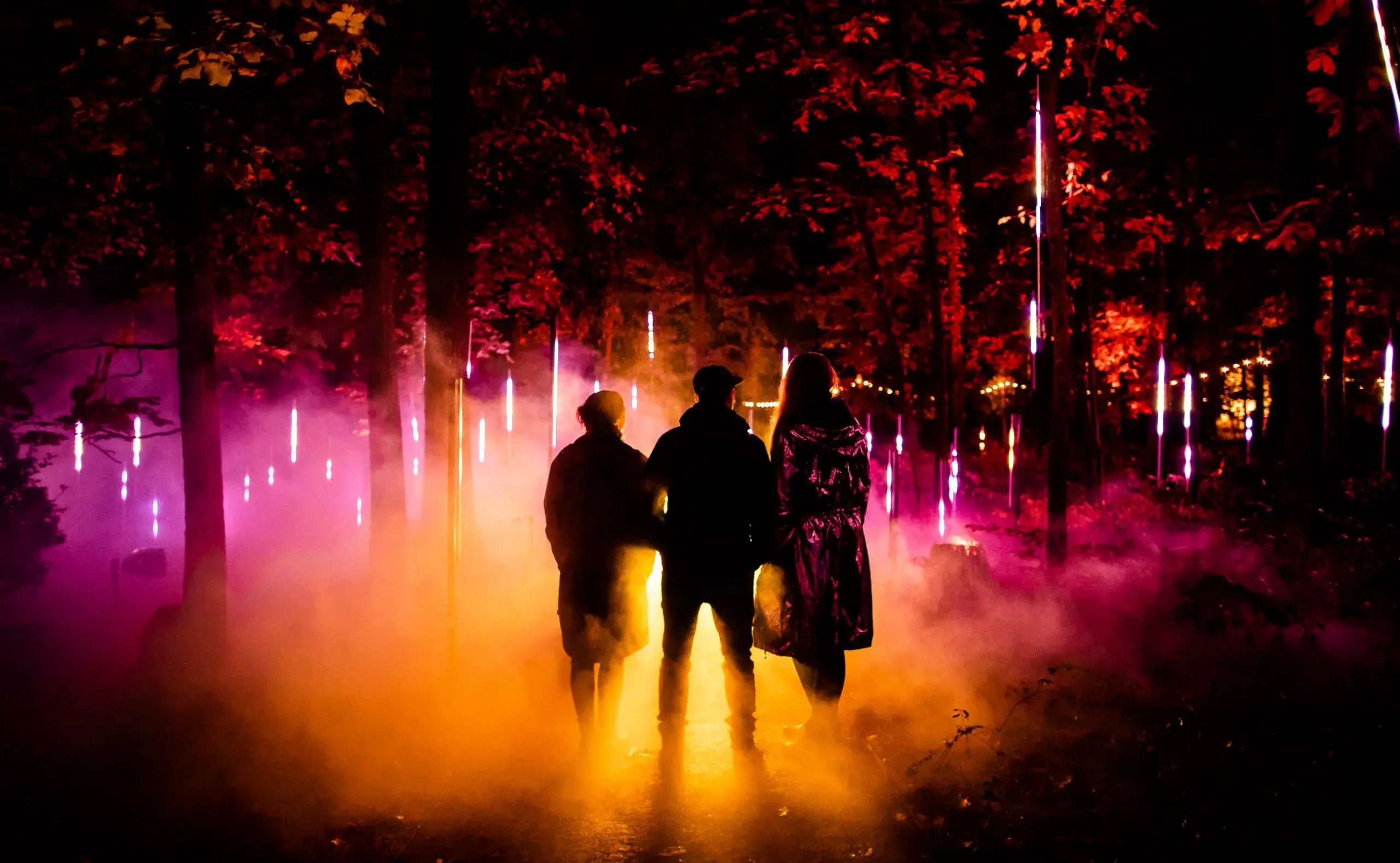 North Forest Lights at the Crystal Bridges Museum of American Art in Bentonville, AR
In each case, the pattern repeats: cultural institutions use immersive work to expand when, where, and how learning happens; the goal is not to replace the collection, but to give people a reason to want to stay past closing time.
What institutions are actually buying
Strip away the visual spectacle, and what museums are really commissioning is dwell time, after-hours attendance, and a kind of emotional storytelling that a wall label can't deliver – thereby reaching into an expanded clientele. Wonders of Our World: Ocean isn't competing with the museum's daytime exhibits; it's extending the campus into hours the museum used to simply be closed, allowing for more revenue, greater possibilities of the kind of art being displayed, and reaching in to an untapped audience. North Forest Lights did the same for Crystal Bridges' grounds.
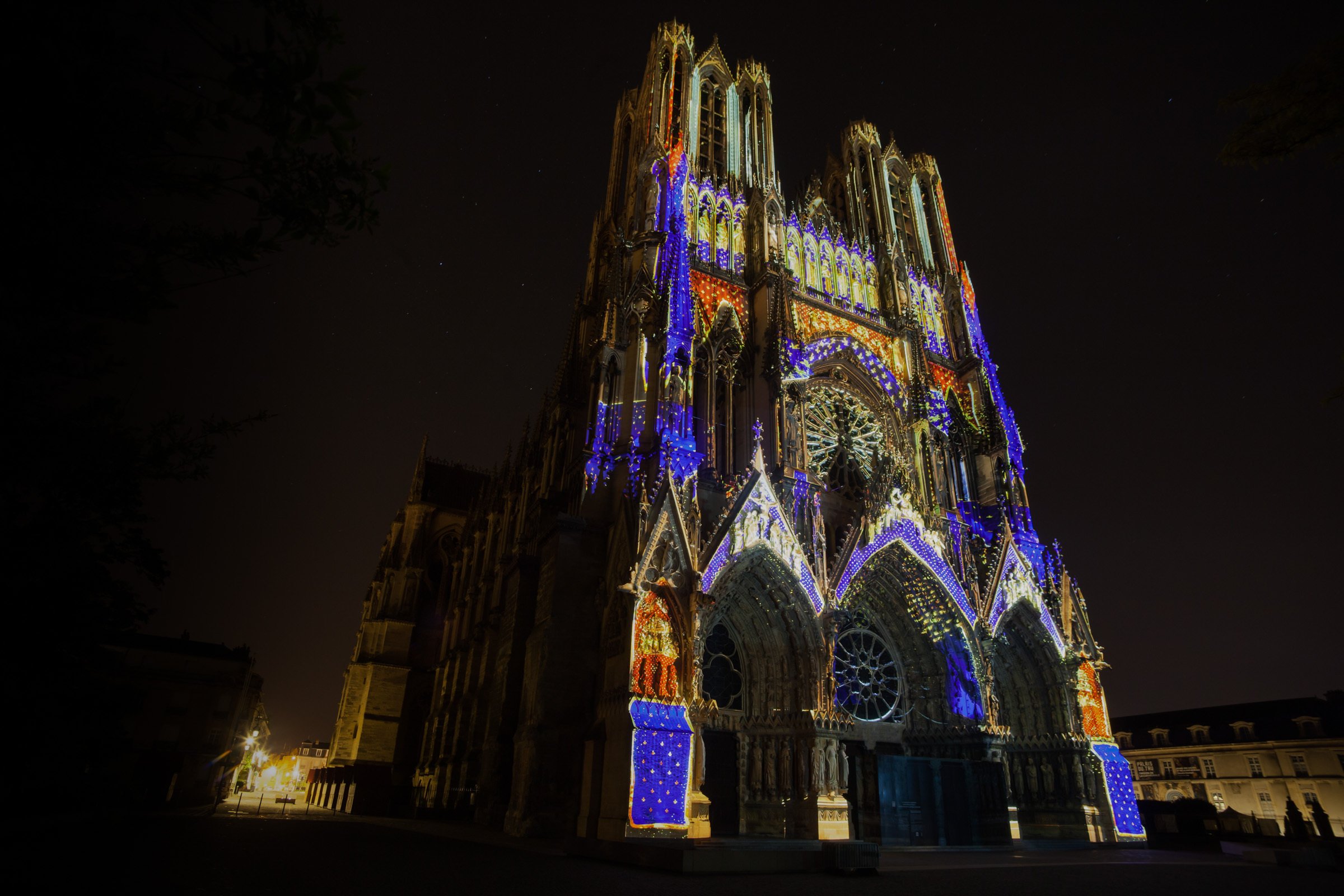 Regalia at the Reims Cathedral, projection mapping in Reims, France, by Les Studios Moment Factory
That's a placemaking argument as much as a creative one, and it's the reason these commissions increasingly get approved by the same institutional leadership that oversees the collection itself, not just the marketing department. Extended hours, higher dwell time, a stronger emotional hook, and a clearer line between mission and audience: that combination is what institutions are actually paying for, whether the invoice says "projection design" or not.
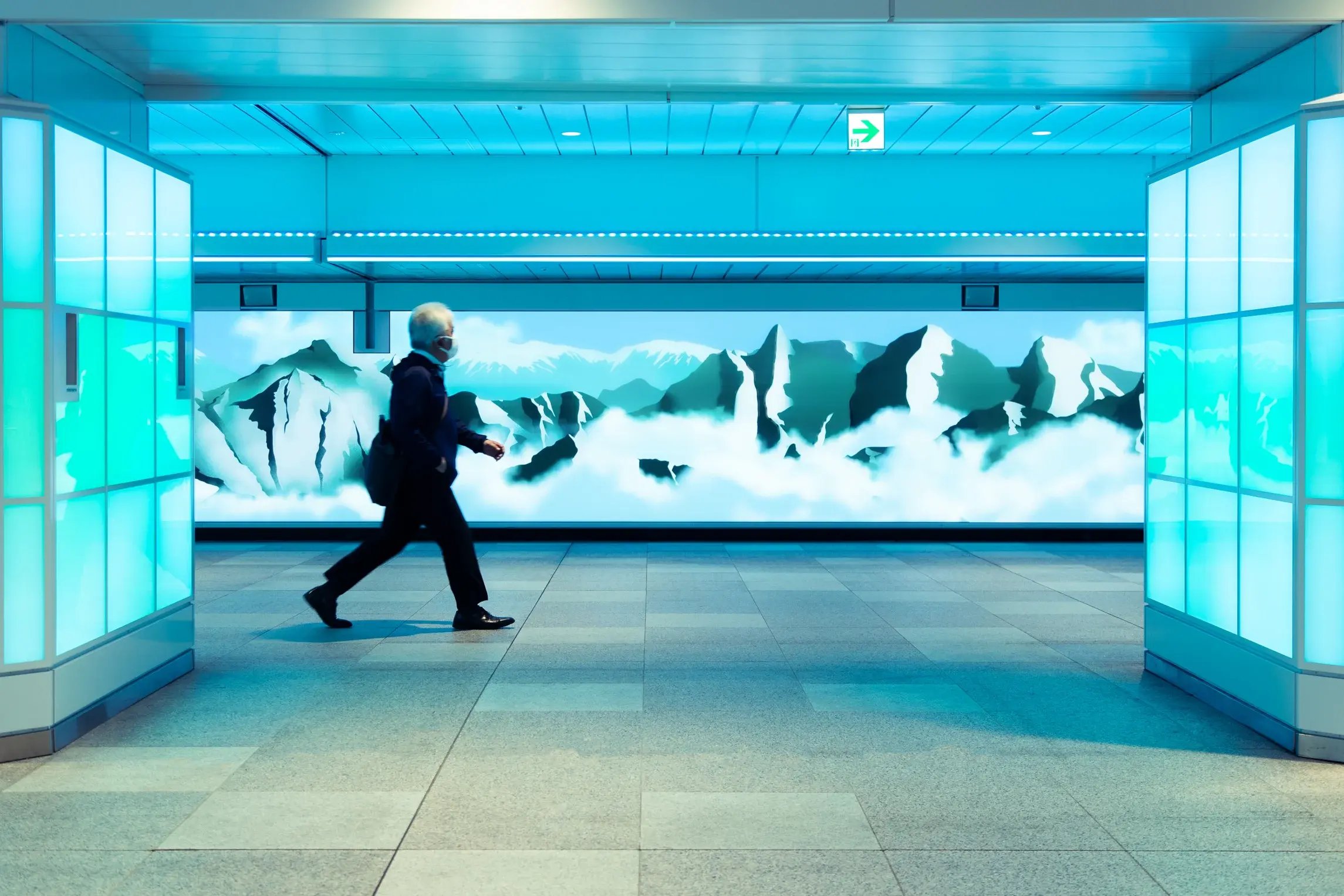 The Colour Bath at Tokyo's Shinjuku Station
Why infrastructure matters as much as creativity
Underneath all of it sits something considerably less glamorous, and arguably more important than any single installation. Moment Factory runs its large-scale, programmable work on a proprietary platform called X-Agora, the runtime backbone that keeps a piece running every night, in every weather condition, with nobody backstage to intervene.
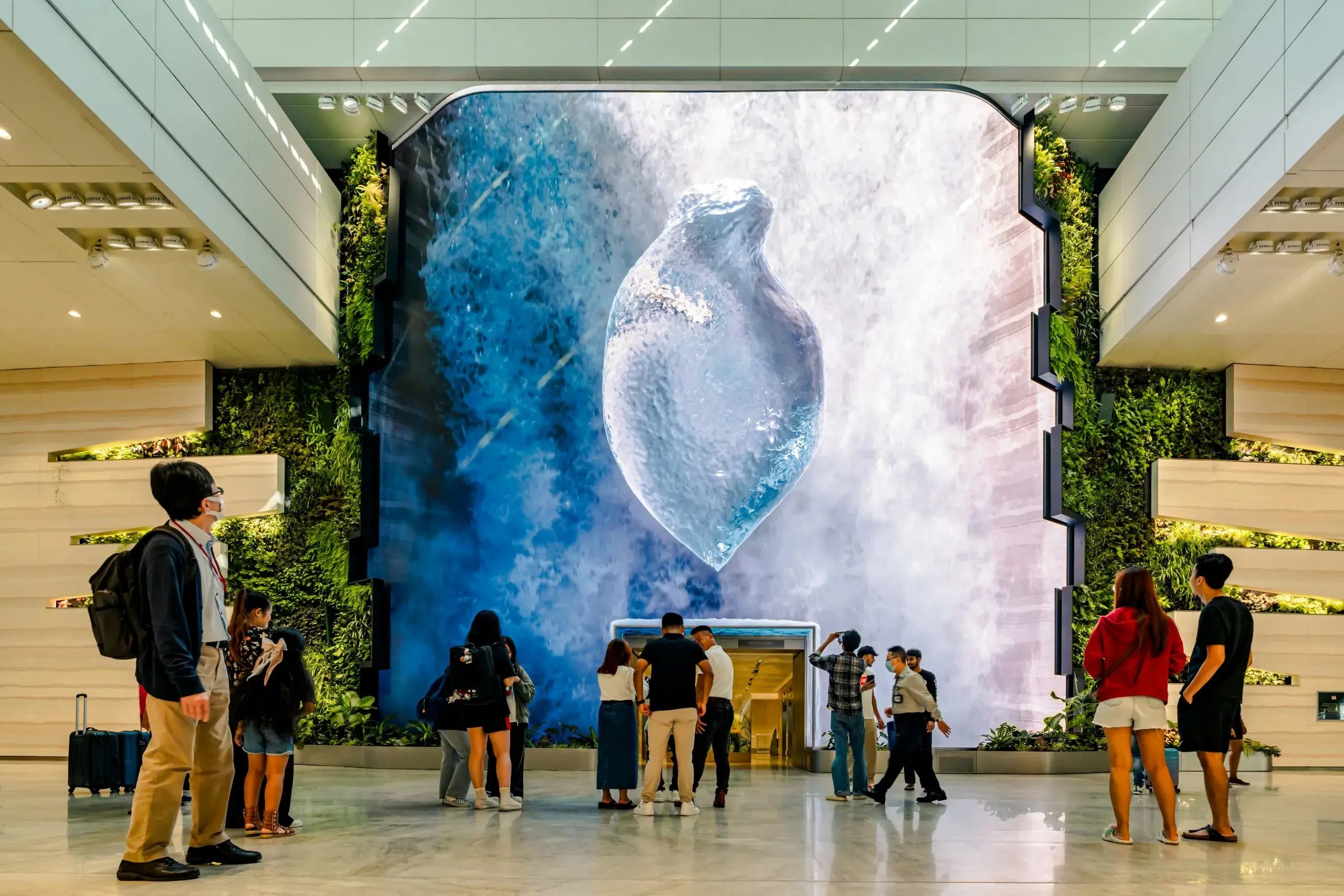 Singapore's Changi Airport’s Terminal 2 by Les Studios Moment Factory Inc.
It's easy to skip past in a highlight reel. But it's the actual explanation for how a twenty-five-year-old studio can hand a nonprofit research institution a nightly outdoor show and trust it to work on night one and night five hundred, the same reliability that keeps a piece like this running through an international airport's daily crowds without missing a beat.
Why audiences should care
The studio's most visible public-facing proof of that reliability right now isn't a museum, it's a garden. Astra Lumina, part of Moment Factory's Lumina Enchanted Night Walk series, is currently running in five U.S. cities plus Australia and Turkey, almost entirely inside botanical gardens. It traces back to a single decision: in 2014, Marie Belzil visited Quebec's Parc de la Gorge de Coaticook, where the owners wanted to light up a bridge, and proposed a full night walk instead, letting the site's own story set the direction. That call became Foresta Lumina, and Foresta Lumina became the template for more than two dozen Lumina walks worldwide, including this one.
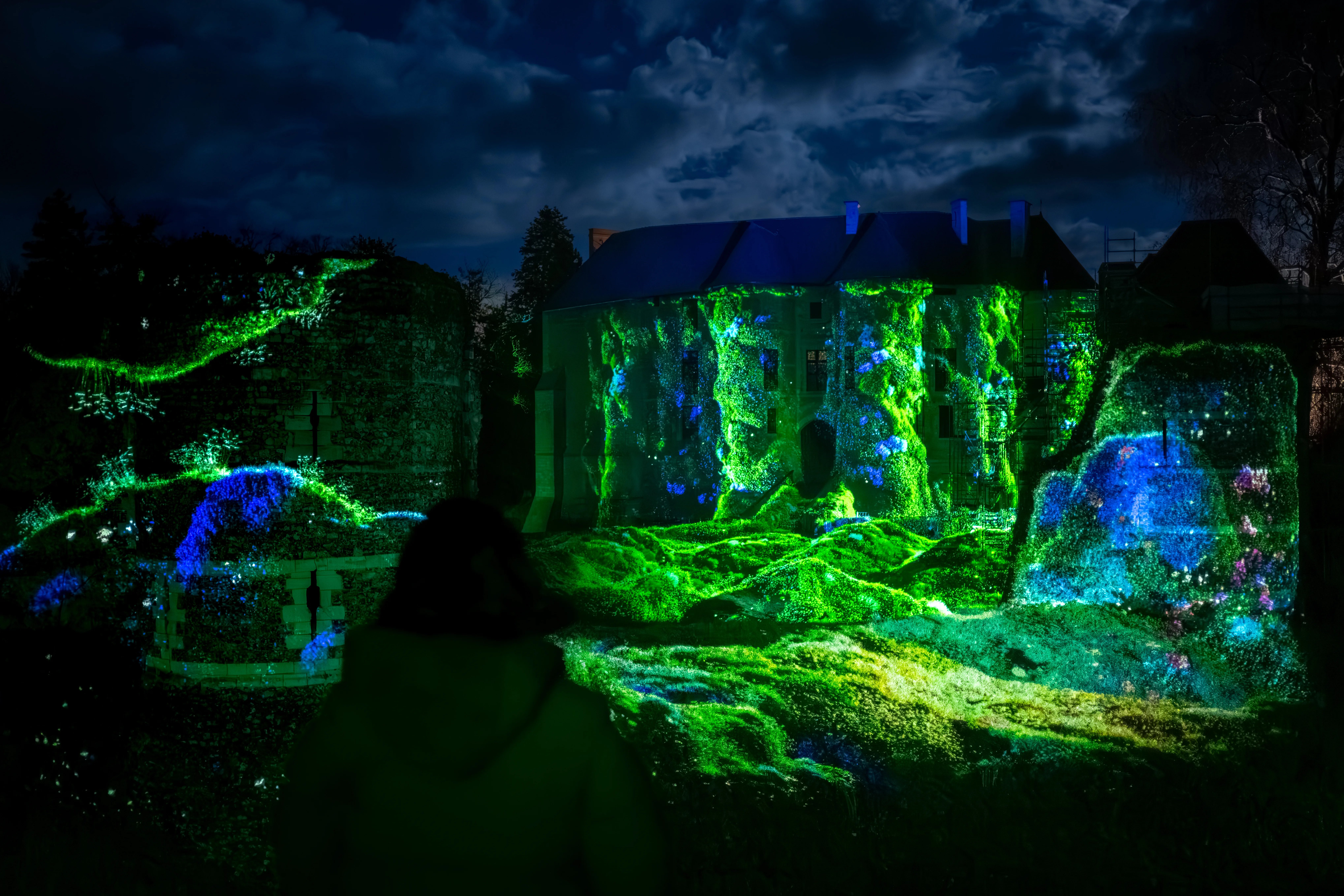 Arbora Lumina projection mapping at the Château d'Harcourt arboretum in Normandy, France
It's the same instinct running through the National Geographic courtyard and the Crystal Bridges grounds: let the place set the direction, and build the infrastructure to sustain it. For the commissioners, museum leaders, placemakers, and architects who make up much of the CODAsummit audience, Belzil's talk is a rare chance to hear that reasoning straight from someone who's applied it at both a quiet Quebec gorge and a national institution's front courtyard.
To hear directly from one of the creative leaders shaping immersive public experience, join Marie Belzil at CODAsummit 2026 in Santa Fe. Learn more and register here.
.png?width=900&name=2_%20_Naked%20Excess_%20by%20Michelle%20Bui%20-%20Curated%20by%20MASSIVart%20for%20ROYALMOUNT%20(Montreal).png)