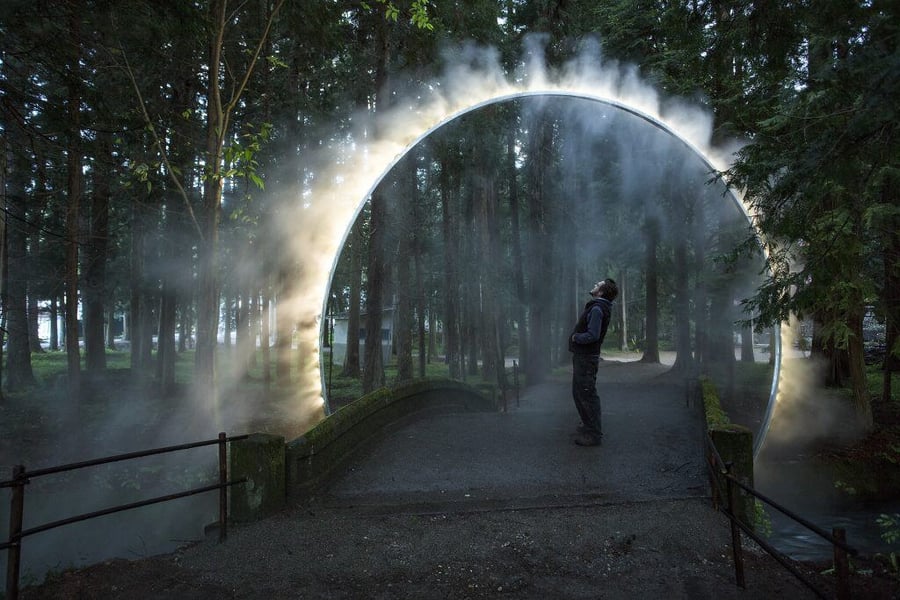
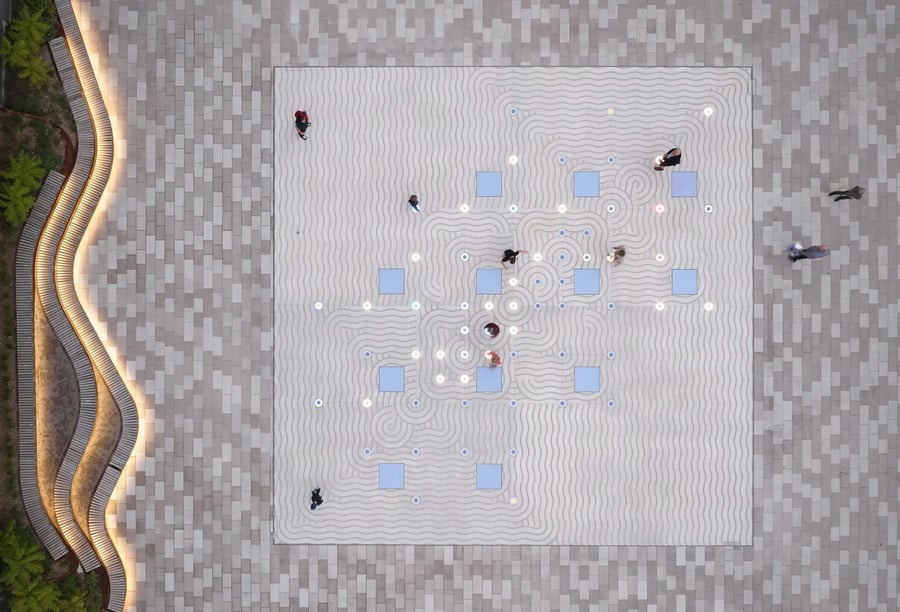
Artists working in public art are increasingly using sound in countless ways: as sculptural vibrations, as interactive audio triggered by touch or motion, as layered field recordings, as composed scores that drift through plazas and walkways. In every form, sound invites listeners to slow down, tune in, and reconsider their surroundings. It transforms public spaces into immersive, ever-changing soundscapes that deepen our awareness and foster a shared sense of presence.
In Haha Real by Rachel Rossin, produced by Weingarten Art Group, sound becomes a playful intervention in the urban soundscape. In Buffalo Bayou Park's Cistern space, the project transforms the vast industrial relic of the Cistern into a unique world, drawing on innovative technologies and taking visitors on a journey inspired by the classic children’s story “The Velveteen Rabbit.” This site-specific installation was on view February through November 2024.

MASARY Studios takes a more meditative approach in In Stillness, a work that uses sound to create pockets of tranquility within busy public settings. Known for blending light, sound, and movement, MASARY crafted an audio environment that invites listeners to pause—not merely to listen, but to breathe. Tones unfold slowly, responding subtly to the presence of visitors. The result is an auditory sanctuary, one that transforms a public plaza into a shared moment of reflection.

Other artists use sound to make visible the hidden rhythms of urban life. In Barrier Tape, SpY Studio reimagines a simple police-style caution tape as a monumental sound installation. The piece incorporates pulsing audio reminiscent of alarms or warnings, a commentary on surveillance, control, and the coded languages of city infrastructure. Here, sound is not soothing but provocative—an insistent presence that forces listeners to confront the systems beneath the surface of public space.

SOFTlab’s Infinity Field is an array of fifty vertical mirrored chambers on the plaza of a mixed-use development on the banks of the Chao Phraya River in Bangkok, Thailand. The installation merges sound with sculptural form, creating an environment where audio responds to light and motion. The result is a constantly shifting sonic landscape that transforms as people move through it. The work demonstrates how sound can operate as both architecture and atmosphere, filling space as fluidly as light.

In Passifolia, artist Lartigue Beatrice combines field recordings with immersive design to create a lush acoustic garden. By touching a light beam in the installation, the visitor widens it and releases a bird song just above him. He feels the warmth of the light on his skin, and the gentle sounds of nature surrounding him. Layered with the sounds of flora, fauna, and environmental textures, the piece transports visitors into a heightened natural world, even within an urban context. Passifolia is a monumental and interactive artistic installation, commissioned by Hermès.

Together, these works illustrate the expanding possibilities of sound in public art. Whether playful, meditative, confrontational, or transportive, sonic artworks shape how we move, feel, and pay attention. They remind us that listening is an act of presence—and that public space, when infused with sound, becomes a living, breathing composition.
Relevant posts