Public art opportunities have expanded dramatically over the past decade. Public art agencies are commissioning more work than ever, and civic, cultural, and private-sector leaders increasingly recognize the social, economic, and placemaking value of creative projects. Commissioned budgets are growing, opportunities abound—and communities are richer for it.
Yet some of the most compelling public artworks exist not because a budget was approved, but because an artist refused to wait for permission.
Around the world, artists are conceiving, financing, and producing ambitious public works on their own initiative—projects driven by vision, risk-taking, and persistence. Burning Man has become a powerful proving ground for this model, but the entrepreneurial artist-led project—created without a traditional commission—can be found far beyond the playa.
One such artist-entrepreneur is Charles Gadeken, whose project Elder Mother was a CODAawards winner last year.
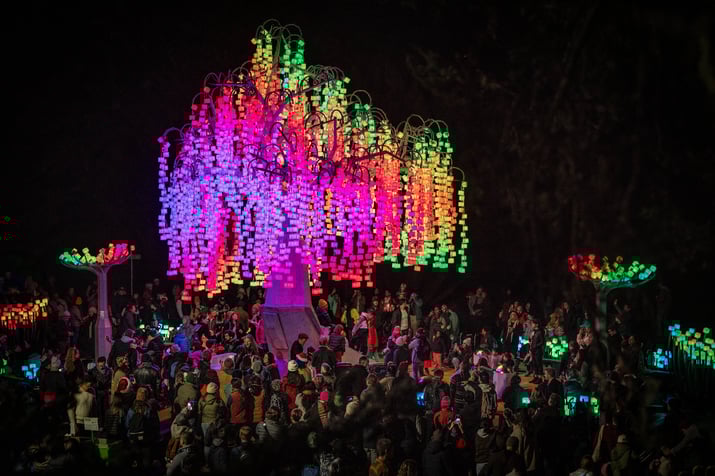
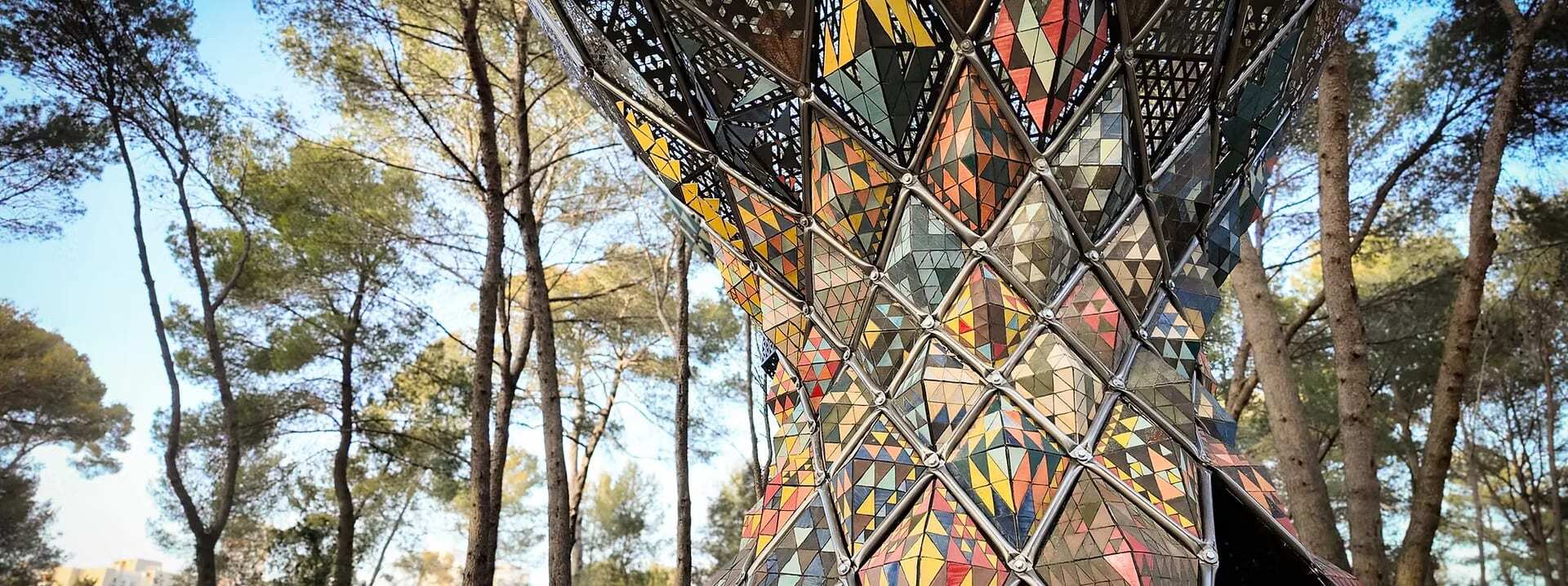
Elder Mother is a monumental illuminated sculpture installed in San Francisco’s Golden Gate Park as the centerpiece of Entwined, an immersive public art environment. Rising 30 feet tall with a 25-foot-wide canopy, the work takes the form of a glowing metal tree, embedded with thousands of individually programmable LED light cubes that generate constantly shifting color and light patterns.
Conceptually, the project draws inspiration from Hans Christian Andersen’s fairy tale “The Little Elder-Tree Mother,” in which a magical tree offers comfort, stories, and companionship. Gadeken translated this narrative into a contemporary, participatory artwork: Elder Mother plays hours of folklore, fairy tales, and personal stories in more than two dozen languages through embedded speakers. Visitors become co-creators—using QR codes to influence lighting patterns via their phones, and RFID elements that allow physical interaction with the work.
This transition required partnerships, persistence, and negotiation. The project was presented in collaboration with the San Francisco Parks Alliance and the San Francisco Recreation and Parks Department, organizations that helped secure permits, infrastructure, and site support. Entrepreneurial projects do not happen in isolation; they succeed because artists actively build coalitions around their ideas.
The sculpture was designed, fabricated, and engineered locally at The Box Shop, a collaborative industrial arts workspace in San Francisco’s Bayview–Hunters Point. Gadeken assembled a multidisciplinary team to build the structure, integrate complex electronics, and solve the logistical challenges inherent in creating a work of this scale.
Fundraising was equally critical. Beyond institutional backing, Elder Mother relied on individual donations to cover materials, transportation, labor, and installation costs. Volunteers, artists, engineers, programmers, and supporters contributed time and expertise—demonstrating how entrepreneurial artists mobilize communities around shared vision and purpose. The result is a sculpture Gadeken describes as a “magic, monumental, awe-inspiring, shade-bearing tree that moves in the wind and speaks through the language of light and color.”
Elder Mother is as much a feat of entrepreneurship as it is of artistry. Artists are not just makers. They are founders, fundraisers, producers, collaborators, and risk-takers. Elder Mother stands as a luminous example of what happens when creative vision meets entrepreneurial action.
DO YOU HAVE AN ENTREPRENEURIAL ART STORY TO SHARE WITH CODAZINE SUBSCRIBERS? We want to hear it. Contact: editor@codazine.com